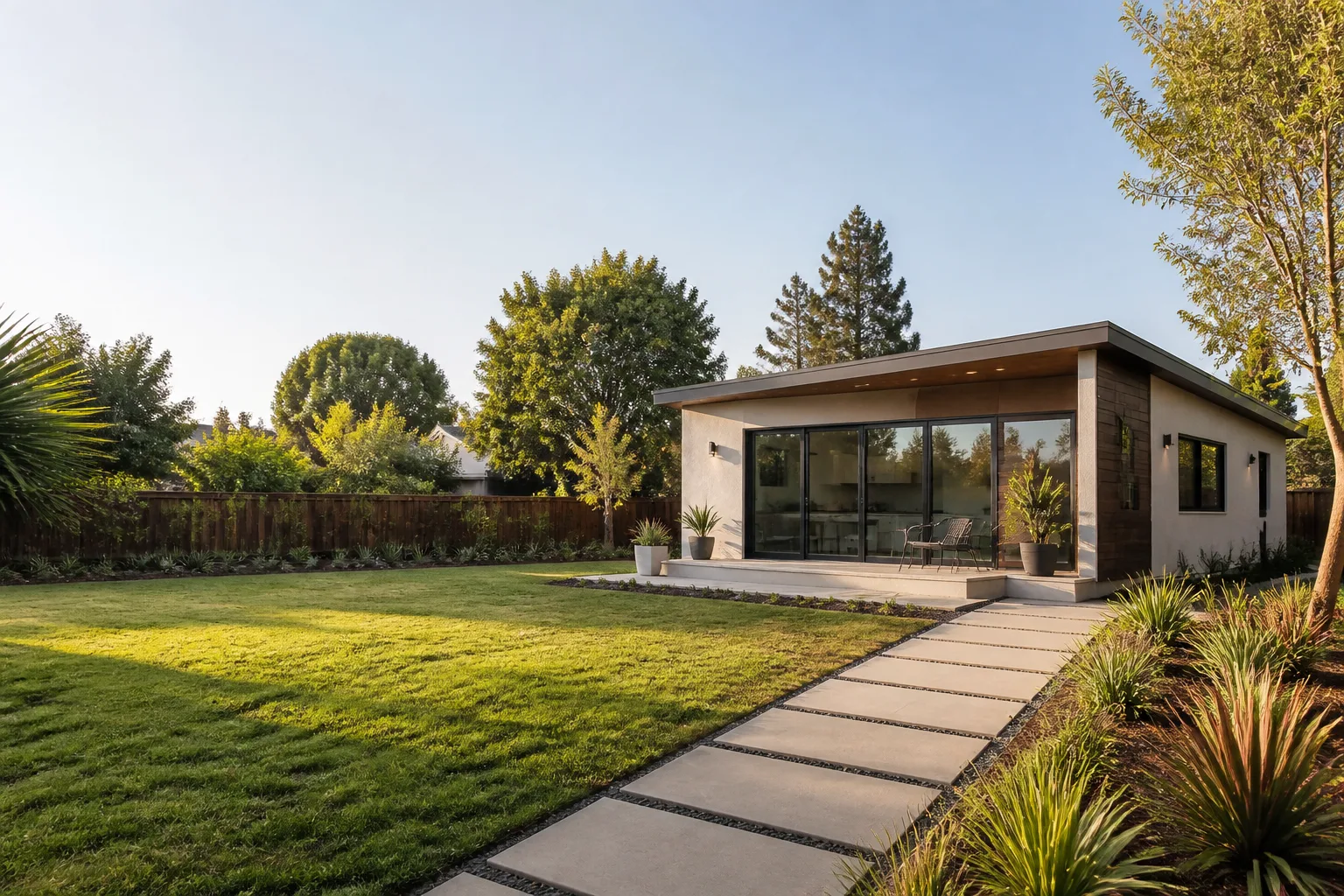
Cover New Detached ADU: The Los Angeles Owner’s Guide
We stock and install Cover-compatible parts for new detached ADUs across Los Angeles, with most replacement jobs running $140 to $380 installed depending on the component and your unit’s series. If you call before noon on a weekday, we can usually get a tech to your site the same day. Most owners discover the failure the hard way: a panel that no longer seals, a fastener that’s pulled loose, or a corner trim piece that’s started to gap after a couple of Southern California summers.
Cover builds precision panelized units, and the parts that keep them weather-tight and square are specific. We’re an independent service provider, not a Cover dealer, which means we match parts by spec and measurement, not by brand loyalty. That’s been the reliable way to keep these ADUs performing in Los Angeles conditions, from the marine layer in the Palisades to the dry heat of the Valley.
Key takeaways:
- Cover new detached ADU replacement parts in Los Angeles typically run $140 – $380 installed.
- We stock common Cover-compatible fasteners, gaskets, trim, and panel hardware on our trucks.
- Every job gets a written price before we touch anything, and the work is backed by the Garrison Standard for one full year.
Which Cover Models This Applies To
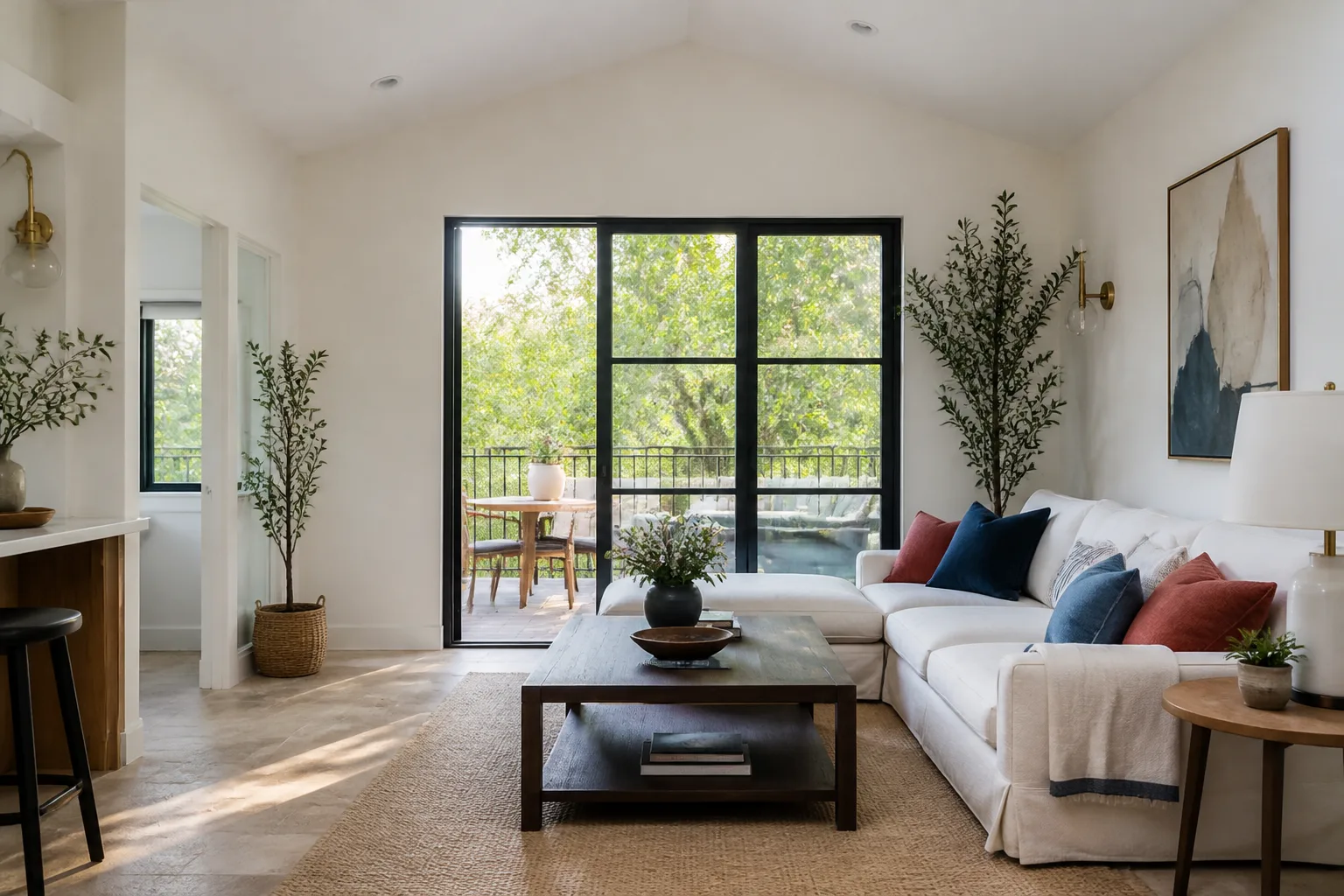
Cover’s new detached ADUs use a panelized wall and roof system built around their proprietary steel framing. What matters for parts matching is the panel generation and the connection hardware. If your unit was installed in Los Angeles before 2021, it’s almost certainly a first-generation panel system with exposed fasteners at the base track and a gasket profile that’s been revised since. Units installed 2022 or later use the updated panel-to-panel seal and a different corner bracket.
Here’s the practical way to identify what you need: open the door casing and look at the manufacturer label on the interior face of the jamb. It will list the build date and the panel series. If the label’s gone, measure the panel thickness at the corner joint. First-gen panels run 4-1/2 inches including the interior finish layer; current production runs closer to 5-1/8 inches. That measurement tells us which gasket set and fastener pack your unit takes. We also work with parts for Abodu and Dvele units, and the same measurement-first approach applies.
OEM Cover parts are fine, but they’re not always the best value. The gaskets, in particular, are a commodity EPDM profile that we source from the same American manufacturers that supply the window and door industry. We’ll tell you when OEM makes sense (panel-locking hardware, mostly) and when a spec-matched aftermarket part does the same job for 30 to 40 percent less.
Signs Your Cover New Detached ADU Is Failing
- Daylight at the corner joints. The panel-to-panel gasket compresses over time, and in Los Angeles heat-cycling, it takes a set and stops rebounding. You’ll see a hairline of light from inside, which means water and bugs have a path too.
- Water staining at the base track interior. This usually points to a failed sill gasket or a base-track seal that’s been nicked during a pressure-wash. Left alone, it wicks into the flooring channel and starts rusting the steel track.
- Loose or backed-out panel fasteners. Cover’s steel stud framing expands and contracts with temperature swings. Over time, fasteners at the top plate work loose. If you can turn a screw head with your fingers, it’s already lost its clamp load.
- Gapping trim at roof eaves. The eave trim on a Cover unit takes direct sun. The sealant behind it dries out after four to six Los Angeles summers and the aluminum trim lifts at the corners. This is the most common call we get in Burbank and Sherman Oaks, where afternoon heat is relentless.
- Door or window binds after rain. If your entry door suddenly rubs the jamb after a wet week, the corner brackets are shifting. On some early first-gen units, the bracket’s slot was cut too long at the factory, which allows more panel movement than the gasket can absorb.
Replacement Cost & What’s Included
Here’s the honest price range for Los Angeles, parts and labor together:
- Gasket replacement (one panel joint): $140 – $210. Includes removing the old gasket, cleaning the channel, and installing the current-profile EPDM.
- Base-track seal replacement: $190 – $280. Includes lifting the panel slightly, replacing the sill gasket, and re-torquing the track fasteners.
- Fastener pack replacement (full unit re-torque): $160 – $240. We replace all loose panel fasteners with the correct self-drilling screws and torque them to spec.
- Eave trim re-seal (one side): $180 – $320. Includes removing the old sealant, re-seating the trim, and applying a marine-grade sealant rated for direct UV exposure.
The range comes down to access and condition. A ground-level unit with one bad joint is the bottom of the range. A hillside unit with decking blocking the work, or a panel that’s been leaking long enough to need track clean-up, pushes it higher. We give you a written line-item price before any work starts, same as every project we do. The labor is backed by the Garrison Standard: one full year, and if the part fails within that year, we come back and make it right at no charge.
DIY or Call Us?
There’s no high-tension or electrical hazard in replacing a Cover panel gasket or re-torquing fasteners, so a careful homeowner can handle the inspection side. What we’d tell you to check yourself: look for daylight at the corners, run a finger along the base track for moisture, and see if any screw heads turn easily. That tells you what you’re dealing with.
The place DIY goes wrong is the fasteners. If you strip one in the steel framing or drive a hardware-store screw that’s a half-size off, you’ve created a new problem that costs more to fix. The same goes for the eave trim: the sealant has to be fully cut out, the surfaces cleaned and dried, and the new bead tooled correctly or it fails again in a year. If any of that gives you pause, call us at (213) 732-1415 and we’ll take a look. The estimate is free.
FAQs
Expect four to six years in our climate before the EPDM gaskets take a compression set. Units with south-facing wall exposure in the Valley will be at the shorter end; coastal units in El Segundo or Torrance with afternoon overcast will push toward the longer end.
Fasteners can be re-torqued if they’re caught early, and that’s a repair. Gaskets and sill seals are replacement items once they’ve compressed or torn; no sealant will reliably restore a failed EPDM gasket. Call (213) 732-1415 and we’ll tell you which category yours falls into before quoting anything.
Most single-joint gasket replacements and fastener re-torques take 45 to 90 minutes on site. A full eave re-seal on one side runs two to three hours including sealant cure time. We do the work in one visit.
We stock common Cover-compatible gaskets, base-track seals, fasteners, and sealant on our trucks. Unusual panel-locking hardware or first-gen corner brackets may need a 2 to 3 day order. We’ll tell you at the estimate, in writing, what’s stocked and what isn’t.
Call Fielding ADU Los Angeles for Your Cover ADU Repair
If your Cover new detached ADU is showing daylight at the corners, taking on water, or loosening up, call us at (213) 732-1415. We’ll put the price in writing before we start, pull any permit the job requires, and stand behind the fix for a full year. That’s how we’ve done it since Reed Calloway started building ADUs in Los Angeles twelve years ago, and it’s how we’ll do it on your unit.
Written by Reed Calloway, Owner, Fielding ADU Los Angeles at Fielding ADU Los Angeles, serving Los Angeles and nearby areas.