Why Los Angeles Homeowners Choose Cover ADU
Fielding ADU Los Angeles provides independent Cover ADU service, repair, and installation across Los Angeles, from Eagle Rock to Mar Vista and every neighborhood in between, including Cover repair in Los Angeles. We are not a Cover dealer or an authorized warranty center. We are a local ADU builder that knows Cover’s panelized systems well enough to catch the tolerance issues most crews miss. If your Cover unit has an air leak at a panel joint, a bowed wall section, or a failed blower door test, call (213) 732-1415 and we will diagnose it in writing.
Cover builds precision-engineered panelized ADUs. That precision is the product’s biggest strength and its biggest vulnerability. A Cover panel is manufactured to tolerance in a factory, then set on a concrete slab poured by a local crew under Los Angeles conditions. When the slab is off by more than an eighth of an inch, the panel does not care how good the factory was. The gasket compresses unevenly, the corner opens, and air moves through the building envelope. We understand exactly where factory tolerance ends and site work begins. That is the gap we close.
Reed Calloway founded this shop to handle exactly this kind of problem. He grew up in Eagle Rock, trained at Los Angeles Trade-Technical College, and has been building ADUs in Los Angeles for going on twelve years. His father built a garage conversion in Glassell Park in the 1980s with no permit and a list of headaches Reed still hears about. That is why every Cover job we touch starts the same way: put it in writing, pull the permit, do the work.
Our independence matters. We are not bound by Cover’s service network, so we can tell you honestly when an OEM part is worth the wait and when a commercial-grade substitute is the smarter call. We are independently owned and operated inside the Garrison Partners family, which has been building to the Garrison Standard since 2006. Every job gets a written price before any work starts and a written one-year guarantee after it ends.
Why Trust Fielding ADU Los Angeles for Your Cover ADU?
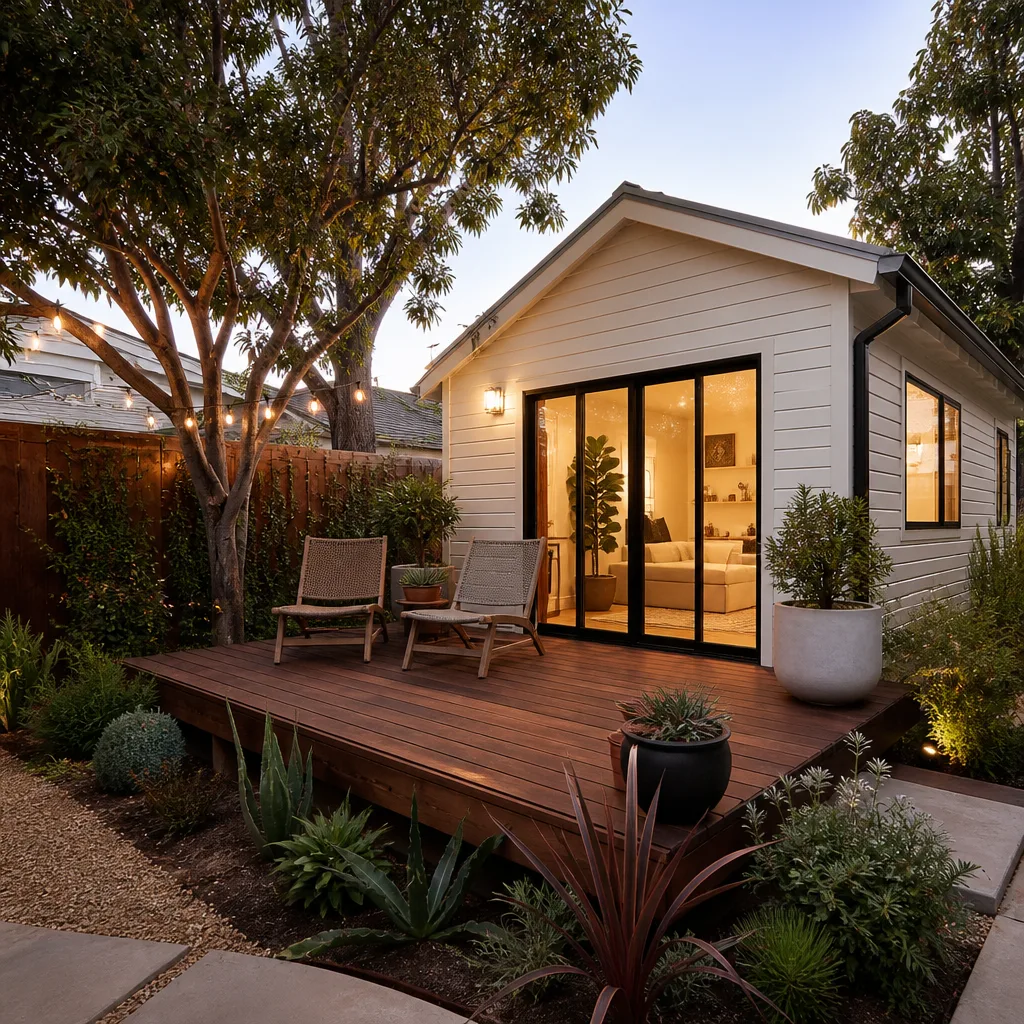
Most general contractors in Los Angeles have never set a Cover unit. They have set plenty of stick-built ADUs and maybe a prefab or two, but Cover’s S Series and L Series have their own assembly logic, their own sealing details, and their own ways of failing. Our crews do not learn on your lot. Reed Calloway spent his early twenties swinging a hammer on residential remodels across the east side, then went back to Los Angeles Trade-Technical College for evening courses in building codes. He has worked with panelized ADU systems like Cover’s for over a decade, and he is known for putting the permit set and the line-item budget in front of a homeowner before anyone signs anything.
We know where Cover panels misbehave. S Series units, for example, have factory-installed electrical bus ducts that can pinch wiring at the wall-to-roof transition. A crew that rushes the panel connection will leave you with a dead circuit and no idea why the breaker keeps tripping. We have seen it enough times to check those transitions before we even plug in a tester. When your Cover unit has an envelope issue, we do not guess. We pressure-test, we inspect the gaskets, and we tell you what we found before we quote a repair.
We are also a Garrison Partners location, which means the Garrison Standard applies to every Cover job: a written price upfront, permitted work done by the book, and a full year of written guarantee. If something we touched fails within 365 days, we come back and fix it at no charge. That is not a promise we make casually. It is the basis of our business.
Common Cover ADU Problems We Fix in Los Angeles
Cover factory panels are consistent. Los Angeles slabs are not. The most common failures we see are the result of that mismatch. Here are the five issues we address most often on Cover units across the city.
- Panel joint gasket misalignment at corners. This is the cold-air and damp-air problem nobody sees until the first heavy rain or Santa Ana wind. The cause is almost always a slab that exceeds the 1/8-inch tolerance Cover requires. When the slab deviates, the panel sits proud at one corner, the gasket compresses unevenly, and the seal fails. We see this most often in older Los Angeles neighborhoods where slabs were poured for 1920s garages, not modern ADUs. The fix is slab grinding, re-seating the gasket with OEM butyl tape, and a pressure test to confirm the envelope is tight. This is the single most common Cover repair we perform in Los Angeles.
- Electrical bus duct pinching on S Series units. Cover’s S Series runs electrical wiring through factory-installed bus ducts that transition from wall panels to roof panels. If the panels are set with even slight misalignment, the duct can pinch the wire at the transition point. Homeowners notice a tripped breaker or a dead outlet in the unit. The repair is usually straightforward: we open the affected transition, free the wire, re-seat the duct, and re-test the circuit. The longer the unit runs with a pinched wire, the higher the risk of a short, so call us the first time that breaker trips.
- Window flashing failure at sill pans. Cover’s proprietary window flashing is effective when site-installed trim is back-sloped correctly. Many Los Angeles installers do not back-slope the trim, and water pools at the sill pan, eventually working its way into the wall cavity. This is a slow failure. You may not notice it for two or three years, then a stain appears on the interior drywall below the window. We re-slope the trim, replace the flashing with Cover OEM material, and seal the sill pan properly. It is a repair we do in half a day.
- HVAC duct collar delamination. Cover units that are craned in during cold weather, below 40°F, sometimes arrive with factory ceiling panel HVAC collars that have delaminated. The adhesive on those collars does not bond well in cold temperatures. In Los Angeles this is less common than in colder climates, but it happens on winter installs in the foothills and canyons, or anywhere a unit sits overnight before setting. We replace the collars with commercial-grade HVAC connectors when OEM parts are backordered, which they often are. The repair is not glamorous, but a detached duct collar means your mini-split is conditioning the attic cavity instead of the living space.
- Bowed wall panel sections on delivery. Sometimes a Cover panel arrives from the factory with a bow. This can happen during shipping, especially on hot Los Angeles freeways where the trailer interior bakes. A bowed panel will not seat properly, and forcing it creates stress on the gaskets and corner connections. We assess the bow before installation. If it is within tolerance, we proceed with careful seating. If it is beyond tolerance, we document it and recommend a replacement panel through the proper channel before the unit is set. Catching the bow before installation saves weeks of delay and a world of air leakage.
Cover Parts & Our Repair-vs-Replace Approach
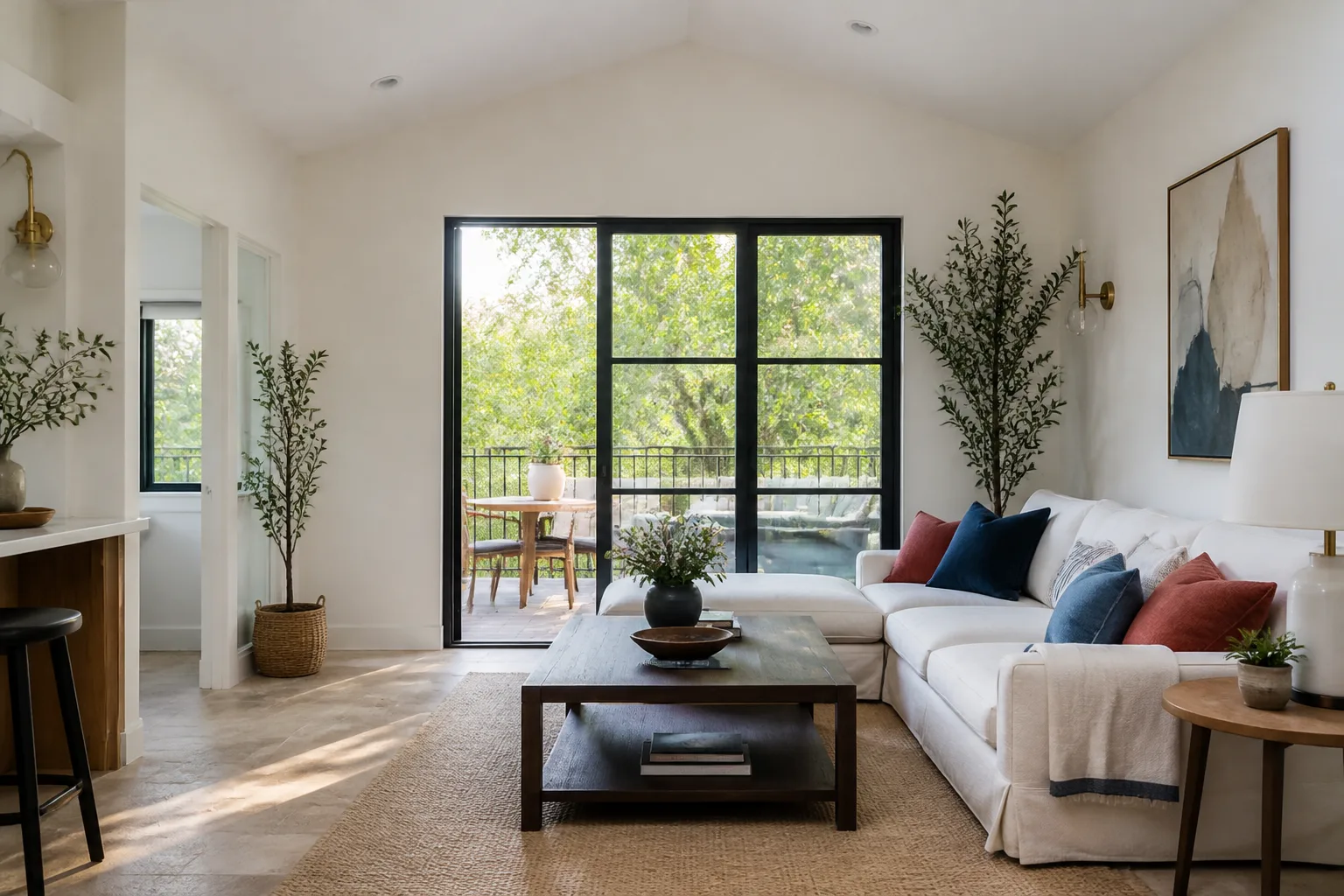
We use Cover OEM structural panels and seals for anything tied to the building envelope. The envelope is the part that keeps water and air out, and we are not going to save you a few dollars with an aftermarket gasket that fails in eighteen months. When a corner gasket needs re-seating, it gets OEM butyl tape. When a structural panel is involved, it gets an OEM panel. There is no shortcut that makes sense on the envelope.
Where we do substitute is in components that are readily available in better commercial grades. If a Cover electrical connector is backordered for three weeks and a commercial-grade connector is on the shelf at our Los Angeles supplier, we use the commercial-grade part and tell you we did it. Same story with HVAC duct collars. The commercial versions often outperform the factory hardware, and they are available today, not next month. We quote a repair-first path for panels and gaskets in every case where repair is structurally sound. We only recommend module replacement when a corner joint has failed in three or more locations, because at that point the cumulative damage has compromised the panel connection beyond what sealing can correct.
We stock common Cover seals, butyl tape, window flashing, electrical connectors, and HVAC collars locally in Los Angeles so we can move quickly when a repair comes in. If you are not sure whether your Cover unit needs a repair or a replacement, call (213) 732-1415 and we will give you a written diagnosis and a line-item quote, free.
Our Cover Service Process – Step by Step
- 1
Diagnosis. We inspect the unit, from the slab to the roofline. Every Cover diagnosis includes a check of the panel joints, the window sill pans, the electrical bus ducts, and the HVAC connections. If the issue is an air leak, we pressure-test the unit to find exactly where the air is moving. We put the findings in writing.
- 2
Written quote. You get a line-item price before any work begins. That price is the price. If we find something new mid-repair, we tell you, and you approve the change before we proceed. The number you approve on day one is the number on the final invoice.
- 3
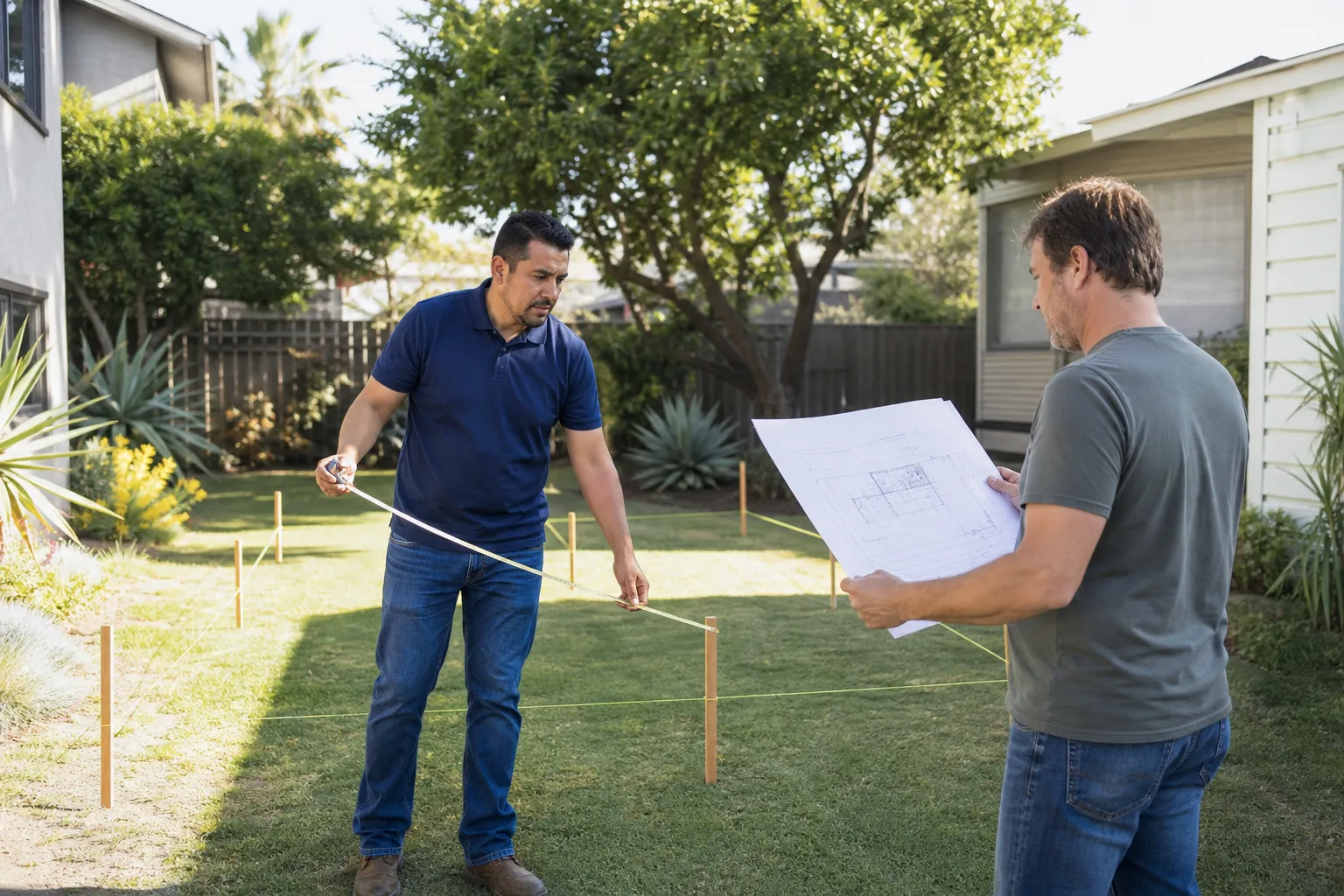
Repair or installation. Our background-checked, uniformed crews do the work. For envelope repairs, we use Cover OEM seals and butyl tape. For electrical and HVAC work, we use either OEM or commercial-grade parts, and we tell you which. For a full Cover installation, we start with a site assessment, verify the slab tolerance before the panels arrive, and make corrections before the unit is set.
- 4
Testing. Every repair is tested before we leave. Envelope repairs get a blower door test or pressure test. Electrical repairs get a full circuit test. HVAC repairs get an airflow test. We do not call a job done until the test passes.
- 5
Warranty. Every Cover repair and installation from Fielding ADU Los Angeles is covered by the Garrison Standard guarantee in writing for one full year. If something fails inside that year, we come back at no charge and correct it. The guarantee is on paper, with exactly what it covers and how it works.
Cover Products We Service & Install in Los Angeles
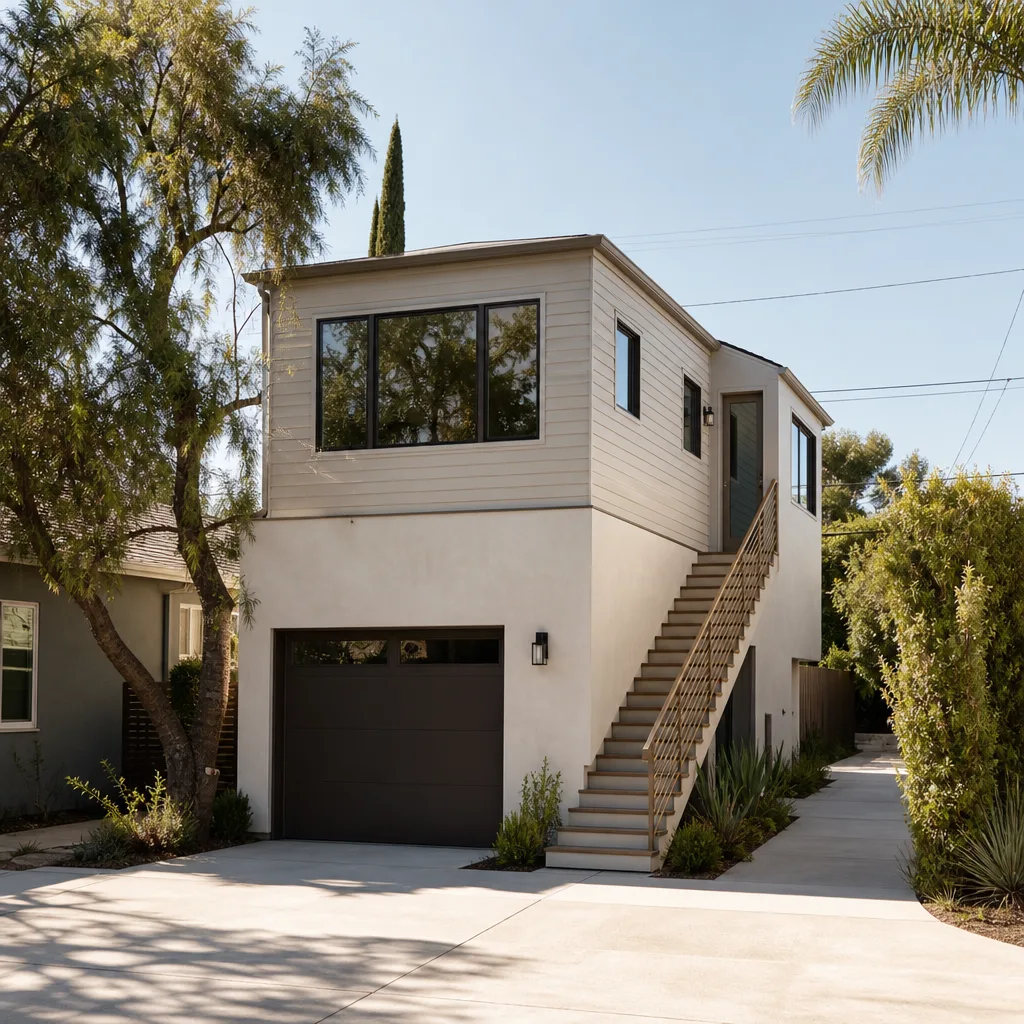
We work on every Cover product line currently on the market in Los Angeles. The Cover S Series, including the studio and one-bedroom panelized units, is the most common unit we see, and it is the one with the bus duct and corner gasket issues described above. The Cover L Series, the larger two-bedroom format, requires more precise slab work because the longer panel runs amplify any slab deviation. We also service the Cover Backyard Studio and the Cover Garage Conversion Kit, which is popular in West Hollywood Cover service neighborhoods and across Los Angeles with detached garages from the 1920s and 1930s. We stock common Cover seals and fasteners for all four lines and can typically source OEM structural panels within a week.
Our team also handles the site-side work that makes a Cover install go smoothly: site assessment, foundation and grading, and Title 24 energy compliance. We are also a licensed Room Addition Contractor. A Cover unit is only as good as the slab it sits on and the site work around it. We get both right.
We Also Service These Brands
Homeowners in Los Angeles research more than Cover, and so do we. Fielding ADU Los Angeles also installs and services Abodu and Dvele ADUs, plus conventional builds using James Hardie siding and Tuff Shed-style structures. If you are still deciding between a Cover unit and another platform, we can walk you through the trade-offs honestly. We build all of them, so we have no reason to push one over another.
FAQs – Cover ADU Service in Los Angeles
Yes. Many Cover warranties are tied to factory-authorized installation, but that does not prevent you from hiring an independent builder. What matters is the workmanship. We install Cover units to the same tolerances the factory requires, and we back our installation with our own written one-year guarantee under the Garrison Standard. If your factory warranty is void because you used an independent installer, our written guarantee is what protects you. Call (213) 732-1415 and we will walk you through what the coverage looks like on paper.
A bowed Cover panel is a delivery or manufacturing defect, not an installation problem. We document the bow with photos and measurements before we set the panel. If the bow is beyond the factory tolerance, we stop the install and work with you to get a replacement panel through the proper channel. If the bow is minor, we can sometimes seat the panel correctly by adjusting the base connection. The key is catching the bow before the panel goes up, not after. We have learned to inspect every panel on the trailer before it is unloaded.
The usual culprit is the panel joint gaskets, and the root cause is a slab that exceeds the 1/8-inch tolerance. When the slab is off, the panel corners do not seat, the gaskets compress unevenly, and the blower door test reveals the leak. Many installers never check the slab before setting panels. We do. Our crew set a Cover S Series studio in Mar Vista and nearby Cover service in Beverly Hills last March, and found the southeast corner panel had a 3/16-inch step from a slab high spot. We ground the slab, re-seated the panel gasket with OEM butyl tape, then pressure-tested the corner and signed off on Title 24 without a single air leak. The owner passed final inspection on the first visit.
Cover floor cassettes are designed for standard residential floor loads, not concentrated point loads from something like a grand piano or a water bed. If you plan to put a heavy item in your Cover unit, we can reinforce the cassette before installation. The work involves adding blocking or a supplemental beam in the affected area, which is far easier to do before the panels are set than after. Tell us during the site assessment and we will include it in the written quote.
It can, but you need to add an access path from the main house or create a separate entrance with proper egress. A detached garage with no interior access is essentially an island, and a legal ADU requires a clear path of travel and proper emergency egress. We have done Cover Garage Conversion Kits in detached garages across Los Angeles, and the access question is always the first thing we sort out. Sometimes it means a new door opening, sometimes a connecting breezeway, sometimes rethinking the kit choice entirely. Call (213) 732-1415 and we will tell you what your specific garage can support.
Cover ADU repair costs in Los Angeles depend on what failed. Gasket re-seating at a single corner typically runs $400 to $900. Window flashing repairs run $500 to $1,200 depending on the number of windows. Electrical bus duct repairs run $350 to $800 per transition. HVAC collar replacement runs $300 to $700 per collar. A full site assessment with a blower door test runs $350 to $600, and we credit that fee toward the repair if you proceed. For an exact price on your specific unit, call (213) 732-1415 for a free estimate. We put every price in writing before any work starts.
Book Your Cover Service in Los Angeles, CA
If your Cover ADU has an air leak, a tripped breaker, a window stain, or a failed blower door test, call Fielding ADU Los Angeles at (213) 732-1415. We answer the phone with a live person, every time, day or night. We will schedule a diagnosis, put the price in writing, and do the work to the Garrison Standard.
Written by Reed Calloway, Owner at Fielding ADU Los Angeles, serving Los Angeles since 2006.