Dvele Site Prep & Utilities: The Los Angeles Owner’s Guide
Site prep and utility work for a Dvele home in Los Angeles typically runs $18,000 to $55,000 installed, depending on lot conditions, trenching distance, and whether you’re bringing new service from the street or upgrading an existing panel. We stock Dvele-compatible site prep components and utility connection hardware on our trucks, and we can usually have a crew on your lot within a few days of your call. Most owners discover they have a problem when a trench fails, a conduit gets crushed, or the utility stub-outs don’t line up with what the Dvele factory shipped. The signs are rarely subtle: standing water where the trench was, a breaker that trips whenever the heat pump kicks on, or the city flagging your setback because the foundation pad drifted three inches off the approved plot plan.
If you’re staring at a failed site prep issue on a Dvele, you’re not alone. Los Angeles soil, especially the expansive clay in neighborhoods like Eagle Rock, Glassell Park, and the hills above Highland Park, moves more than people expect. That movement breaks conduit, separates sewer laterals, and shifts pads. Add in Los Angeles Department of Building and Safety (LADBS) inspection requirements, and you have a job that punishes shortcuts harder than most. That’s why we put everything in writing before we dig.
Which Dvele Models This Applies To
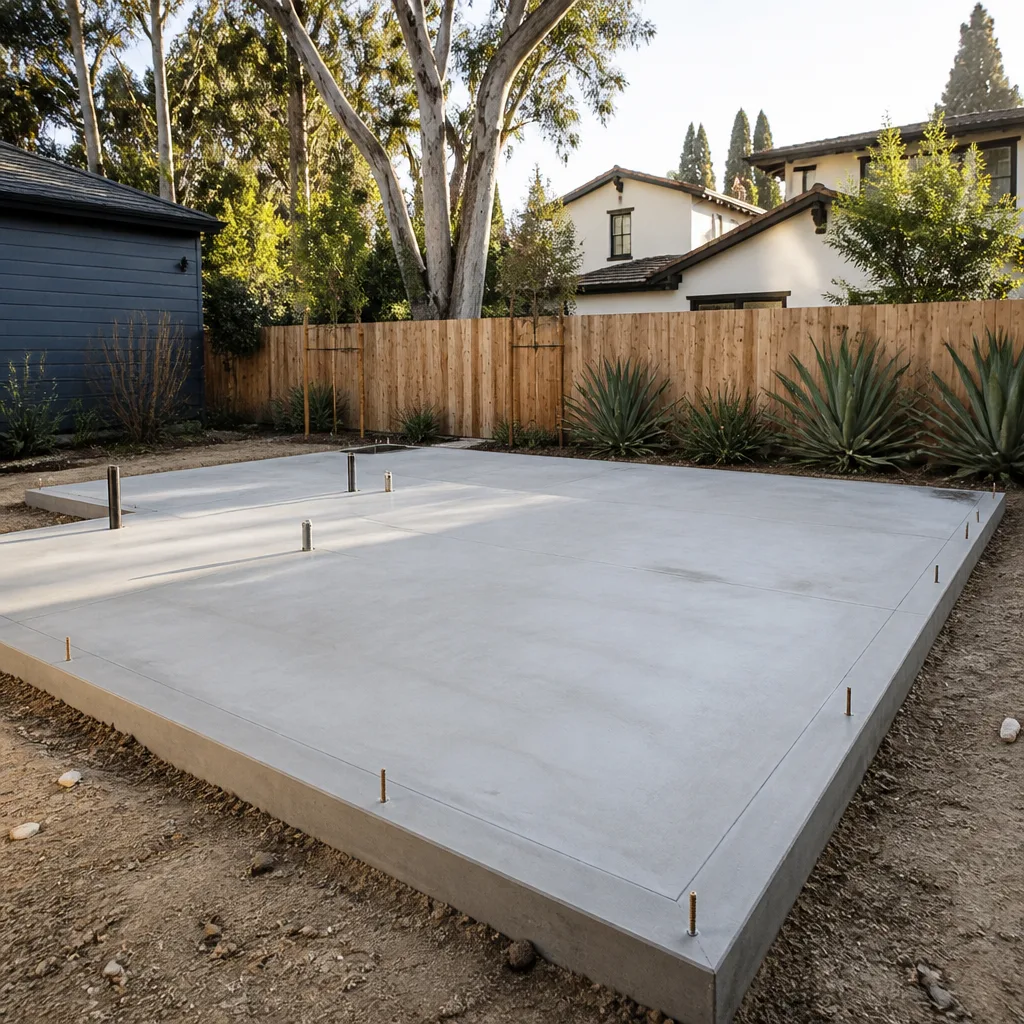
This applies to every Dvele series currently shipping to Los Angeles lots: the Dvele IQ, the Dvele Adapt, and the earlier Dvele Signature line. The site prep requirements are set by the model’s utility chase locations, which are factory-programmed and not adjustable in the field. A Dvele IQ routes its main electrical feed through the rear utility wall, left side, about 18 inches in from the corner. The Adapt runs its sewer stub at a fixed 42-inch depth. If your trench or stub-out is off by more than an inch on either of those, the factory connection hardware won’t seat, and you’re looking at rework.
Here’s the compatibility gotcha most owners miss: Dvele’s factory spec calls for a 2-inch Schedule 80 PVC conduit for the main feed, not the 1.5-inch Schedule 40 you’ll see spec’d on conventional stick-built ADUs in Los Angeles. If a general contractor who has never done a Dvele pulls 1.5-inch conduit, the factory cable bundle won’t fit, and you’re re-trenching. We see this exact failure on roughly one in five Dvele sites we’re called to fix. On the OEM-versus-aftermarket question for site prep specifically: the trench, the conduit, the backfill, and the panel are commodity materials with local code requirements that supersede factory branding. What matters is the spec, not the logo. We use suppliers that meet or exceed Dvele’s written site requirements, and we document every material with the LADBS inspector on site.
We’re an independent Los Angeles service provider. We are not affiliated with Dvele, and we don’t claim to be. We do work on their platform regularly, alongside Abodu, Cover, and Mighty Buildings, and we know where the factory specs and the city code disagree, because we’ve had to fix those disagreements on real lots.
Signs Your Dvele Site Prep & Utilities Is Failing
- Standing water along the trench line after rain or irrigation. This usually means the backfill wasn’t compacted in lifts, or the native clay underneath wasn’t properly scarified. Los Angeles clay expands when wet and shrinks when dry, and that cycle opens voids under the conduit. Left alone, the conduit eventually cracks at a coupling.
- Breakers trip when the heat pump or dryer cycles on. Loose terminations at the panel, undersized feeders, or a conduit that took on water and corroded the conductor insulation. We find this often on Dvele sites where the utility connection was rushed to meet an inspection deadline.
- The foundation pad sits proud of the surrounding grade or shows a visible step. Pad settlement shifts the utility chase points out of alignment. Even an inch of movement at the pad means the factory connections won’t line up, and the sewer line can backslope, which is a code violation in Los Angeles.
- Sewer odors near the vent stack or slow drains throughout the home. A separated coupling at the Dvele stub-out or a backsloped lateral. In the hillside neighborhoods around Silver Lake and Echo Park, the run from the home to the main is often long and steep, and a badly bedded pipe will separate under its own weight.
- The city inspector flagged your electrical panel or meter location during a final. LADBS requires specific clearances around the panel and meter. If the pad was set without accounting for the utility easement or the panel ended up inside the required working clearance of a window or door, you won’t get a sign-off until it’s corrected.
Replacement Cost & What’s Included
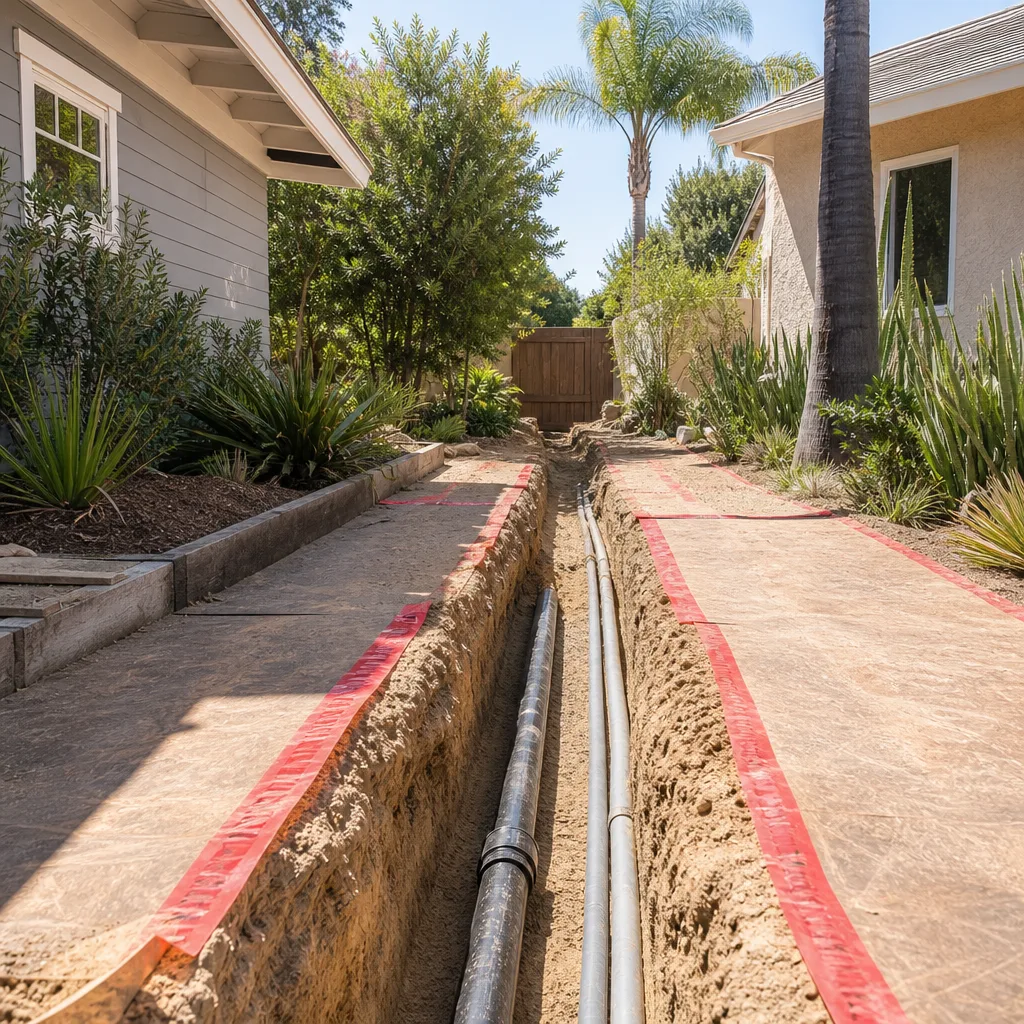
In Los Angeles, you should expect the following ranges for Dvele site prep and utility work, including parts and labor:
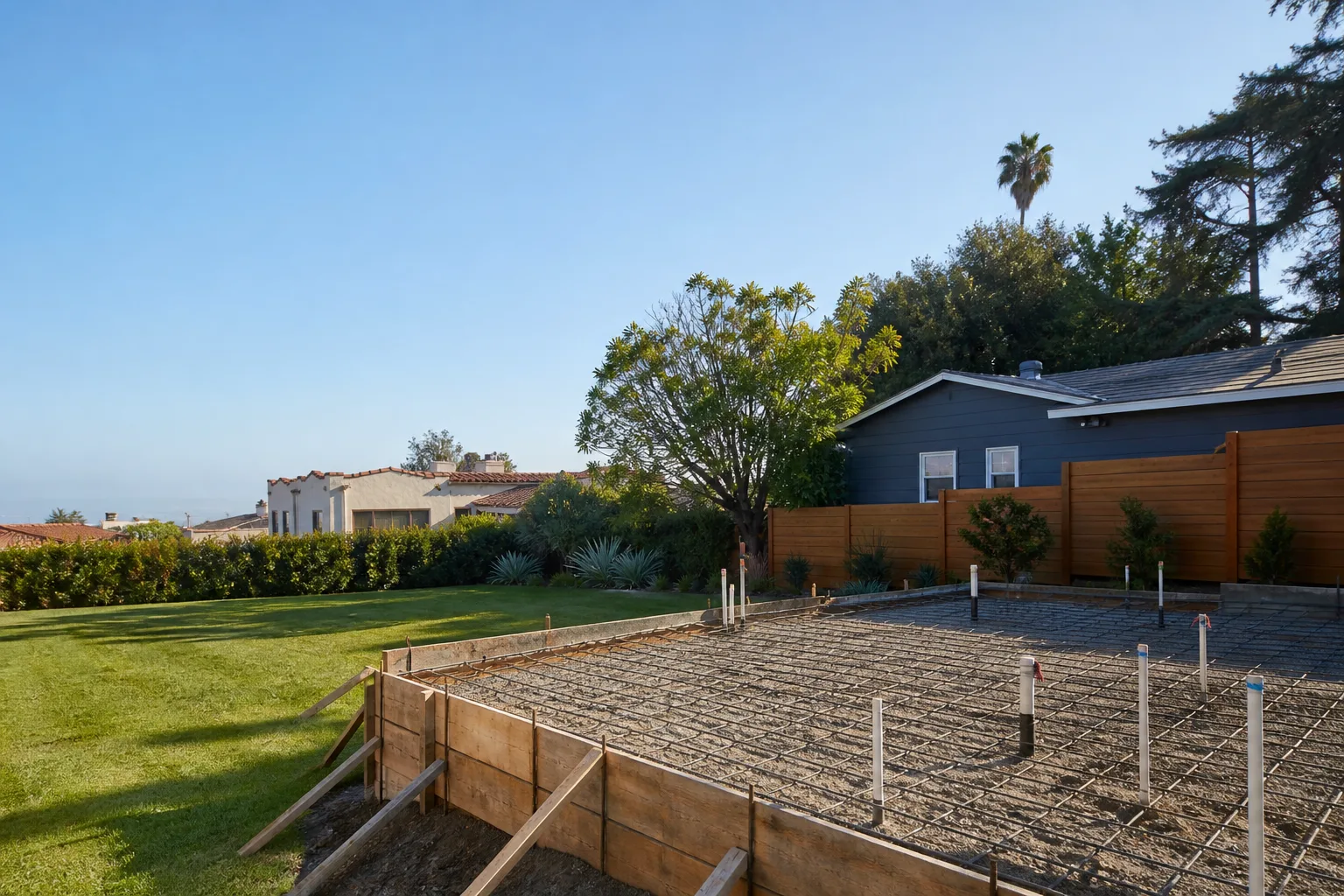
- Full site prep from raw lot: $18,000 to $35,000. Grading, excavation, pad form and pour, trenching, conduit, backfill, and compaction. Price moves with lot slope, soil type, and access for equipment.
- Utility connection only (panel, feeders, conduit, sewer lateral, water service): $9,000 to $22,000. The spread depends on trench distance to the main, whether the service is overhead or underground, and whether LADBS or LADWP requires a panel upgrade.
- Remedial trench repair (failed conduit, separated sewer, standing water): $2,800 to $7,500. This is the fix when the original contractor cut corners on compaction or used undersized conduit.
- Foundation pad correction (lift, re-level, or partial re-pour): $6,000 to $14,000 depending on how far the pad moved and whether the utility stubs need re-alignment.
Every quote you get from us is a written price before any work starts. The number you approve on day one is the number on the final invoice. No change orders unless you ask us to change the scope. Our utility and site prep work carries the same one-year written guarantee as everything else we build: The Garrison Standard covers workmanship defects for 365 days, and if something fails inside that year, we come back and make it right at no charge. Reed Calloway has been building ADUs in Los Angeles for going on twelve years, and he puts the permit set and the line-item budget in front of every homeowner before anyone signs anything. Put it in writing, pull the permit, do the work.
DIY or Call Us?
You can check a few things yourself. Walk the trench line after rain and look for standing water or soft spots. Look at your panel and note any scorch marks, loose breakers, or covers that won’t seat. Check that your sewer cleanouts are accessible and not buried under mulch or pavers. Those are sights and sounds, not repairs, and they’ll help you describe the problem when you call us.
What you should not do is dig. Los Angeles has some of the densest underground utility infrastructure in the country. Gas lines, water mains, high-voltage feeders, and telecom all run through the same easements your site prep work touches. A wrong cut into a gas service line or a live electrical feeder is a life-threatening mistake, not a homeowner fix. Underground service work requires DigAlert notification, LADBS permits, and in many cases LADWP coordination. There’s a reason every cut we make is preceded by a locate ticket and every trench we open gets inspected before it’s backfilled. If your Dvele site prep or utility work is failing, call us at (213) 732-1415 and let a trained crew handle it. Estimates are free, and the price goes in writing before any work starts.
FAQs
Properly installed site prep and utility connections should last 30 to 50 years, but in Los Angeles the weak points are the conduit couplings and the sewer lateral joints, which typically fail inside the first 10 years if the original backfill wasn’t compacted correctly. Expansive clay and seismic movement accelerate the failure. Call (213) 732-1415 if you suspect a problem; we’ll come look, and the estimate is free.
Sometimes. A single separated sewer coupling or a cracked conduit section can often be spot-repaired without re-trenching the whole run. But if the failure is from poor compaction, undersized conduit, or a shifted pad, the repair usually means opening the trench back up and doing it right. We’ll tell you straight which situation you have after we inspect, and the fix is always quoted in writing before we start.
Most remedial trench or utility repairs take 3 to 7 working days, including the DigAlert locate ticket, excavation, repair, LADBS inspection, and backfill. Full site prep from a raw lot runs 3 to 5 weeks. The inspection schedule at LADBS drives part of the timeline, and we sequence work so you’re never waiting on us to show up. Call (213) 732-1415 and we’ll give you a real timeline for your lot.
Yes. We carry Schedule 80 conduit in Dvele’s spec’d sizes, compatible panel equipment, sewer lateral components, and the backfill materials that hold up in Los Angeles soil. For anything we don’t have on the truck, our suppliers in the LA metro get us material within 24 to 48 hours. You won’t wait a week for a part that should already be on site.
Written by Reed Calloway, Owner, Fielding ADU Los Angeles at Fielding ADU Los Angeles, serving Los Angeles and nearby areas.