Last updated October 15, 2026
The Complete Guide to ADU in Los Angeles
Most homeowners in Los Angeles plan their ADU backwards. They browse prefab catalogs, sketch floor plans, maybe even put a deposit down on a design, before they know whether their lot can legally hold an accessory dwelling unit, whether their sewer line has capacity, or whether their lender will fund the build. The result shows up in the numbers: LADBS first-submittal approval for ADU plans sits well below 50%. Not because the rules are unknowable, but because almost nobody checks three basic lot conditions before drawing a single line. This guide works in the order the project actually unfolds in Los Angeles: lot feasibility first, financing second, design third, permits fourth. By the end, you’ll know what to check, what it costs, what the new state laws changed, and when to pick up the phone. For more guides & resources, explore our blog.
Quick Answer
A complete ADU project in Los Angeles runs $180,000 to $450,000 for a detached backyard unit, $120,000 to $220,000 for a garage conversion, and takes 12 to 20 months from first check to certificate of occupancy. The single most important step is a lot feasibility check before design, because zoning, setbacks, utility capacity, and parking rules on your specific parcel determine what you can build, and most first-time applicants skip it. A homeowner who does that check first, gets written pricing from a builder, and understands the permit sequence will move through LADBS months faster than someone who starts with a brochure.
Table of Contents
- Step 1: Run a Lot Feasibility Check Before You Spend a Dime on Design
- Standard ADU, JADU, or Room Addition: Know Which Permit Pathway You’re On
- What AB 2221 and SB 9 Actually Changed for Los Angeles Homeowners
- How ADU Construction Financing Differs from a HELOC
- The Realistic Timeline: Design, Permit, Construction, Inspection, Occupancy
- Los Angeles ADU Costs: Line-Item Ranges That Hold Up
- Prefab vs. Conventional Build: Matching the Method to Your Lot and Budget
- Common Mistakes to Avoid
- When to Call a Professional
- Frequently Asked Questions
- The Bottom Line
Step 1: Run a Lot Feasibility Check Before You Spend a Dime on Design
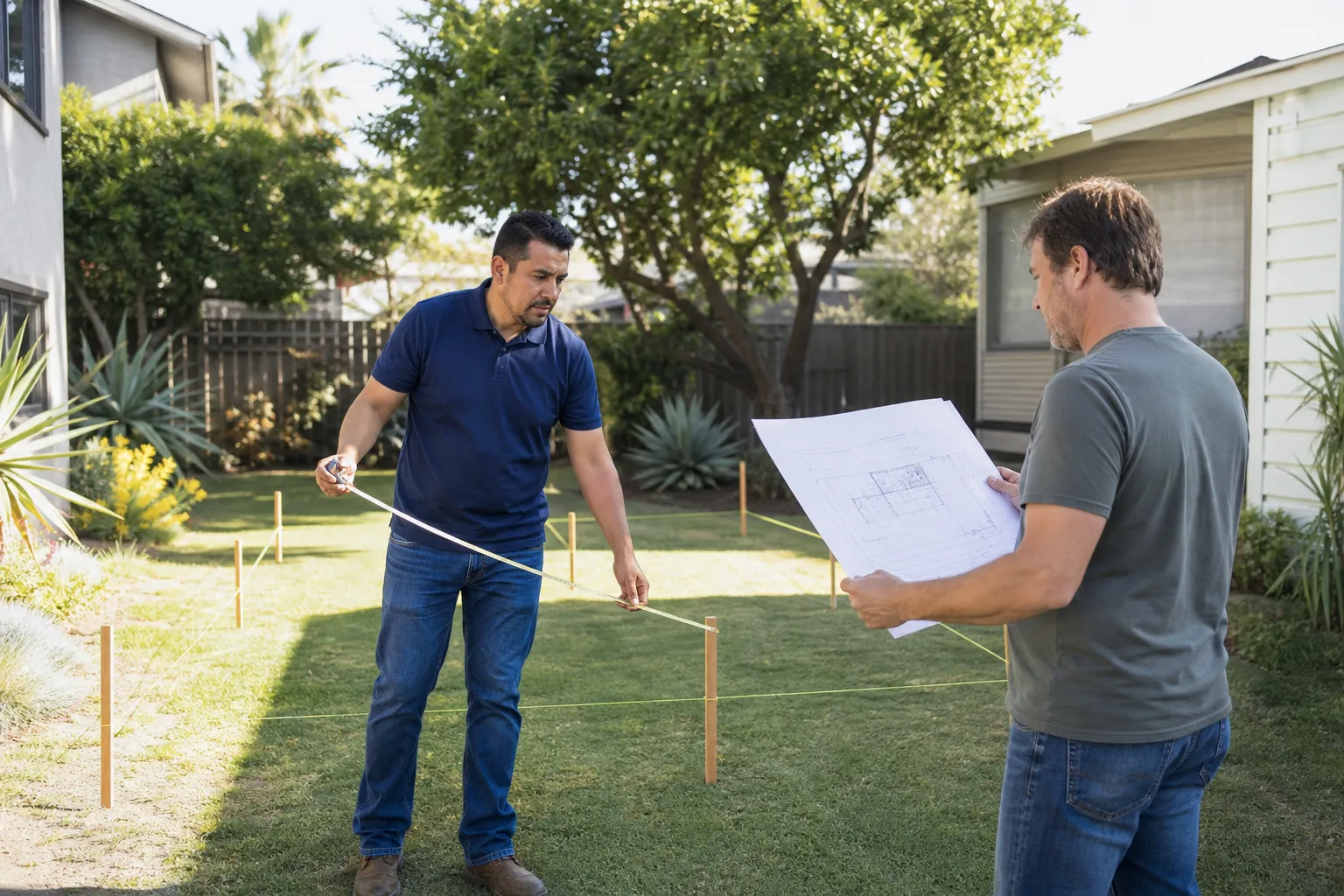
Every ADU in Los Angeles starts with three checks that don’t require a designer, an architect, or a deposit. The first is zoning. Pull your property’s zone designation from the city’s ZIMAS portal (zimas.lacity.org). Your zone determines the maximum ADU floor area, the required rear and side setbacks, and whether you’re in a hillside overlay, a historic preservation overlay zone (HPOZ), or a coastal zone. An HPOZ in neighborhoods like Highland Park or Angeleno Heights adds design review that a standard R1 lot in the Valley does not have. The second check is utility capacity. Los Angeles Department of Water and Power (LADWP) and the Bureau of Sanitation both need to confirm that your electric service and sewer lateral can handle the added load. An ADU with a full kitchen and laundry on a 100-amp panel may trigger a panel upgrade before you can pull the permit. The third check is setback reality against your existing structures. Your ADU cannot sit where it blocks required light, air, or access to the main house. You can often find this in thirty minutes with a tape measure and your property survey. Do these three things before you spend a dollar on drawings.
What to check in the first week:
- Your zone and overlay districts on ZIMAS
- Your panel amperage and sewer lateral condition
- Your rear and side yard setbacks measured against any existing garage or addition
- Whether your property is in an HPOZ or hillside district, which adds review time
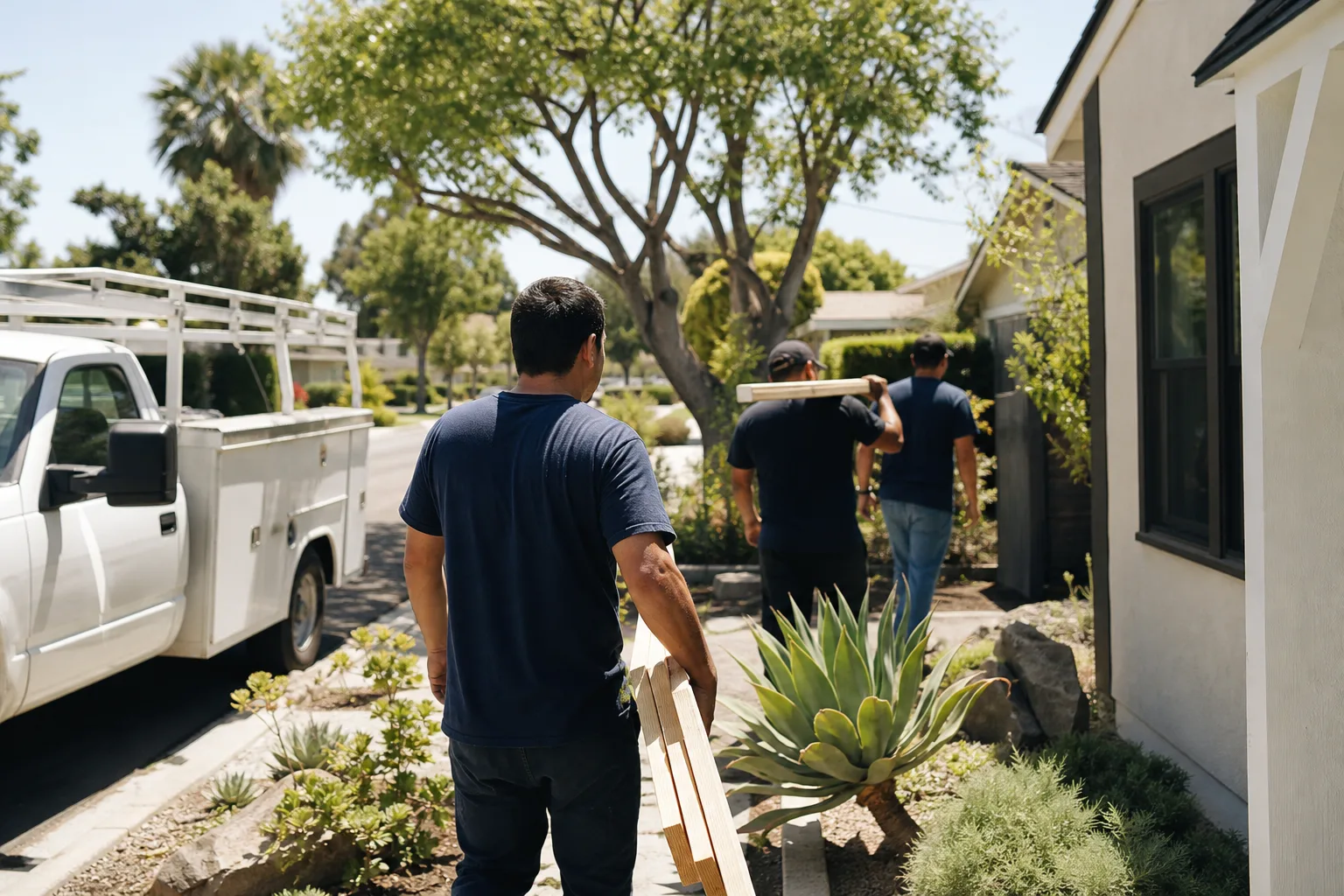
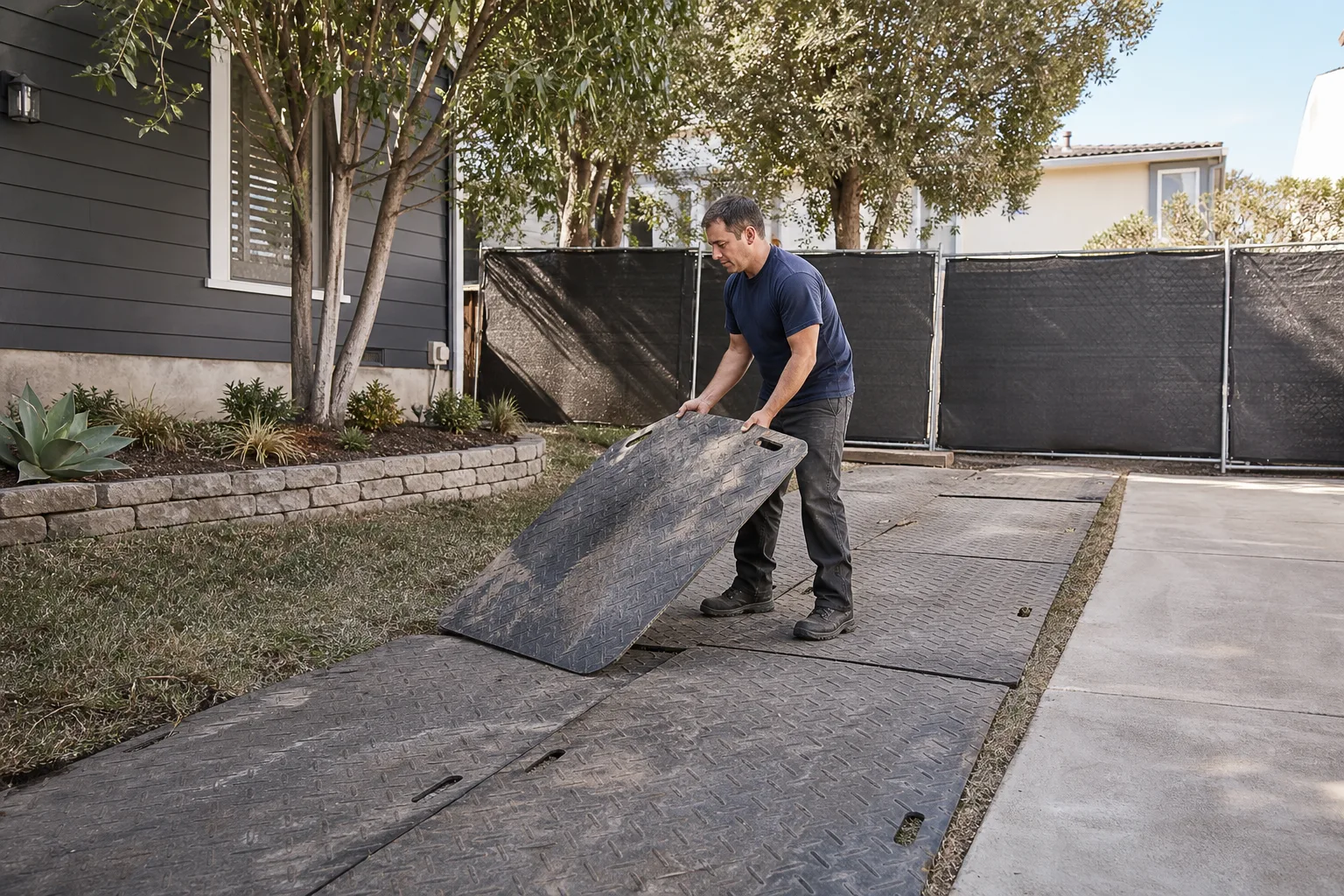
- Parking or driveway access that might block construction equipment
We see homeowners in Van Nuys and Reseda save real money when they do this before hiring anyone. It is the difference between a plan that sails through and a plan that stalls for six months on a variance request.
Standard ADU, JADU, or Room Addition: Know Which Permit Pathway You’re On
Los Angeles treats these three projects differently, and the difference controls cost, timeline, and what you can legally rent. A standard ADU (accessory dwelling unit) is a complete independent living space with its own entrance, kitchen, bathroom, and sleeping area. It can be attached to the main house, converted from a garage, or built new in the backyard. A JADU (junior accessory dwelling unit) is smaller, capped at 500 square feet, and is created entirely within the walls of an existing single-family home, often by carving off a bedroom with its own outside entrance and a small efficiency kitchen. JADUs do not get their own address, and under current state law, the owner typically cannot rent the JADU separately if they don’t live on the property in Los Angeles. A room addition expands the footprint or interior of the main house and is not a separate dwelling at all. Room additions go through standard residential addition permits, not the ADU ordinance, which means different square footage rules, different fire separation rules, and no rental income path.
Rule of thumb:
- If you want rental income or a separate living unit, you need a standard ADU
- If you want an in-law space inside the house and you live there, a JADU may work
- If you just want more family space and you never plan to lease it, a room addition is simpler
Our work at Fielding ADU Los Angeles includes all three. The choice comes down to whether you want the unit to exist independently from the house or be absorbed into it. That one decision changes which permit pathway you walk, which plans you draw, and which financing product applies.
What AB 2221 and SB 9 Actually Changed for Los Angeles Homeowners
California rewrote the ADU rulebook, and Los Angeles adopted the changes. AB 2221, effective January 2023, did three things that matter in Los Angeles. It eliminated owner-occupancy requirements for ADUs built before January 1, 2025, and extended that elimination through January 1, 2030 for newly permitted ADUs, meaning you can build a backyard ADU in Los Angeles, rent out both the house and the unit, and live elsewhere. It prohibits front setback enforcement below four feet, and it forces cities to accept an existing unpermitted garage as is if the conversion brings it up to code. That unpermitted garage in the back of a 1930s West Adams lot is not an automatic tear-down anymore. SB 9, the duplex-and-lot-split law, lets single-family lots in Los Angeles add a second unit by right and, in some scenarios, split the lot. SB 9 interacts with ADU law because the combined effect can push a single-family parcel to three or four dwellings under the right conditions. What neither law does: it does not override HPOZ restrictions, does not erase utility upgrade requirements, and does not shorten LADBS review time. Homeowners who assume the new laws are a shortcut end up in plan check just as long; they have simply unlocked more buildable square footage.
Two specific Los Angeles effects worth noting. The city reduced and in many cases eliminates parking requirements for ADUs within a half-mile of a major transit stop, which covers a large share of the Mid-City and Koreatown neighborhoods. And the city’s four-foot side and rear setback ceiling applies broadly, so standard 4-foot setbacks rule on most flat lots. These laws changed what is possible; they did not change the discipline of checking your specific parcel first.
How ADU Construction Financing Differs from a HELOC
Most homeowners assume a HELOC is the obvious way to fund an ADU in Los Angeles. It often is not. A HELOC works against existing equity, carries a variable rate, and is disbursed as a revolving line you draw down as invoices come in. Construction financing for an ADU works more like a build-to-permanent loan: the lender underwrites the completed value of the property with the ADU included, not just the current equity position. That means you can borrow against projected future value in a way a HELOC doesn’t allow, because construction lenders look at after-completion appraised value. The tradeoff is that construction lenders require a set of documents before they fund: a fixed-price construction contract with a written schedule of values, full permit-ready plans, a builder with a license and insurance certificate, and often a draw schedule with inspections at each release. Lenders want to know that the number in the contract is the number on the final invoice, which is exactly why Fielding ADU Los Angeles puts the price in writing before any work starts. It is a lender requirement for us to do that, and it is how we operate anyway.
Key differences:
- HELOC: fast, no construction documents required, draws against existing equity only
- Construction loan: more paperwork, but underwriting against finished value usually unlocks more dollars
- Cash-out refinance: locks a fixed rate, but you pay closing costs on the entire loan balance
- ADU-specific products: some lenders in California now write loans tied directly to projected rental income from the ADU
Los Angeles homeowners with significant equity and a clean 2022-era rate often find the HELOC cheaper. Homeowners with less equity and a strong rental market find the construction loan the better fit. The correct answer depends on your balance sheet, not on the brochure. A lender who structures ADU loans for a living will make this clear in the first meeting, but you should walk in knowing the two are not interchangeable.
The Realistic Timeline: Design, Permit, Construction, Inspection, Occupancy
A realistic ADU timeline in Los Angeles runs 12 to 20 months from the first site check to final occupancy. Anyone promising six is either starting with a prefab unit already approved by the state, or is not telling you the truth about what has to happen first. Here is the order, phase by phase.
- Feasibility and site check (2 to 4 weeks). Zoning review, utility assessment, site measurement. You can do most of this yourself.
- Design and engineering (6 to 10 weeks). Architectural drawings, structural engineering, Title 24 energy calcs. This phase converges faster when the builder and designer are already aligned.
- Plan check and permit issuance at LADBS (3 to 6 months). First submittal is often returned with comments. The average Los Angeles ADU sees two rounds of correction. Budget for it.
- Utility upgrades and site prep (2 to 6 weeks). Panel upgrade, sewer tie-in, foundation, any grading. Weather in Los Angeles is mild, but city inspections still schedule out.
- Construction (4 to 7 months for conventional; 2 to 4 months for prefab after site work). This is the phase a garage conversion or room addition overlaps with if you combine projects.
- Final inspection and certificate of occupancy (2 to 4 weeks). LADBS final, LADWP meter release, Bureau of Sanitation clearance if applicable.
The thing that surprises most Los Angeles homeowners is not construction. It is the three to six months in plan check. The way to compress that number is a clean submittal: complete drawings, utility letters already in hand, and a written scope of work that matches the drawings explicitly. That is a repeatable discipline, and it is the same discipline behind The Garrison Code that Fielding ADU Los Angeles follows: show up in the window, price in writing, by the book, leave it clean, stand behind it for a year.
Los Angeles ADU Costs: Line-Item Ranges That Hold Up
Los Angeles ADU costs break into fixed categories you can plan against. These are ranges for current local market rates, not national averages, because labor and permit cost in Los Angeles run higher than most of the country.
| Item | Typical Range |
|---|---|
| Garage conversion ADU (400 – 600 sq ft) | $120,000 – $220,000 |
| Detached backyard ADU (600 – 800 sq ft) | $250,000 – $400,000 |
| Attached ADU (500 – 700 sq ft) | $180,000 – $320,000 |
| Plans and engineering | $12,000 – $25,000 |
| LADBS permit fees and school fees | $6,000 – $18,000 depending on square footage and district |
| Utility upgrades (panel, sewer) | $4,000 – $15,000 if required |
| Site prep, foundation, grading | $10,000 – $30,000 |
| Prefab unit itself (Abodu, Cover, Dvele, etc.) | $150,000 – $350,000 installed, before site work |
Prefab costs sit lower on site labor, but the unit costs are fixed, and the site work remains the same. A conventional build using James Hardie siding lets you tune material choices to budget in a way a fixed prefab spec sheet does not. Garage conversions sit at the low end because the shell already exists and the permit pathway moves faster in Los Angeles, especially under AB 2221 provisions for existing unpermitted garages. The number to anchor on is this: a complete, permitted, rentable detached ADU in Los Angeles rarely lands under $250,000 all-in. Quotes that start lower typically exclude plans, exclude site work, or exclude utility upgrades, which means the number you approve is not the number you finish with. We put the full number in writing before work starts, and that line-item price is what holds to the final invoice.
Prefab vs. Conventional Build: Matching the Method to Your Lot and Budget
Los Angeles homeowners now choose between two serious build paths. Modular and prefab companies like Abodu, Cover, and Dvele deliver factory-built units that arrive on a truck, get craned over the house or rolled into the yard, and finish on site in a fraction of the conventional schedule. The advantage is schedule compression and a fixed unit spec. The disadvantage is the factory price is the floor; you still pay for foundation, utilities, permits, and crane access, and a tight Los Angeles lot with overhead wires or a narrow driveway can make the crane cost real money. Conventional builds offer more control over materials, including James Hardie siding and interior finishes you can tune to the neighborhood, and they integrate better with attached ADUs and room additions that have to match the existing house. If you’re weighing both paths, see our DIY vs Professional ADU: The Los Angeles Homeowner’s Decision Guide. A garage conversion, by definition, is a conventional job: you are modifying an existing structure, not setting a new one.
The right question is not which method is better. The right question is which method fits the access constraints on your specific lot. A North Hollywood lot with a 34-foot wide rear yard and no overhead obstructions takes a prefab well. A Silver Lake hillside lot with a steep driveway, no crane staging area, and an existing garage often drives you toward conventional. Reed Calloway at Fielding ADU Los Angeles has seen both pencil out, and the decision almost always comes down to site access and what the lender will fund, not to the brochure on the kitchen counter.
Common Mistakes to Avoid
- Designing before checking the lot. A beautiful plan that violates the 4-foot side setback or sits atop a sewer easement is garbage in Los Angeles, and you paid for it. Feasibility before design, not after.
- Believing the first quote is the total price. A quote that excludes plans, permits, and utility upgrades is a partial quote by definition. The number you approve should be the number on the final invoice.
- Ignoring the panel and sewer until after permit submittal. LADBS and LADWP will not issue a permit with an undersized panel, and discovering it at plan check costs you months, not days.
- Assuming SB 9 means you can do anything. HPOZ, hillside, and coastal overlays still impose review, and utility capacity still rules. State laws expand what is possible; they do not erase the parcel’s constraints.
- Skipping the written guarantee discussion. Ask the builder what happens if the work fails at month ten. If the answer is not in writing, you don’t have an answer. The Garrison Standard at Fielding ADU Los Angeles covers workmanship defects in writing for 365 days, and we return at no charge if something we built fails inside that window.
- Underestimating plan check time. Budget four months for LADBS and celebrate if it is faster. Missing this budget wrecks construction timelines and lender draw schedules.
- Choosing a builder without checking licenses. A contractor without a current CSLB license cannot legally perform work in Los Angeles, and your lender will not fund an unlicensed contract. Verify before you sign.
When to Call a Professional
Call a professional when the lot check turns up an overlay district, a sub-100-amp panel, a sewer lateral of unknown condition, or an existing garage you want converted. These are all normal in Los Angeles, and none should scare you off the project; they simply require a builder who knows the LADBS sequence. You should also call when you have been burned by a previous contractor and you want to see the full price in writing before you commit. At Fielding ADU Los Angeles, we do exactly that: a written line-item price before any work starts, a written one-year guarantee, background-checked and uniformed crew on site, and a live person who answers at (213) 732-1415. If you are in Los Angeles and ready to get a real number, that is the call. For more on our broader work, start at the Fielding ADU Los Angeles home page.
Frequently Asked Questions
A garage conversion ADU in Los Angeles typically runs $120,000 to $220,000, while a detached backyard unit runs $250,000 to $400,000 all-in including plans, permits, utilities, and construction. The final number depends on square footage, site access, and whether you choose prefab or conventional. Call (213) 732-1415 for a written line-item quote, free of charge.
Most ADU projects in Los Angeles take 12 to 20 months from first site check to certificate of occupancy, with LADBS plan check alone commonly taking 3 to 6 months. Prefab units can compress on-site construction but not the permit sequence. If you are planning a Room Addition Contractor in Los Angeles, the timeline runs parallel, not shorter.
Yes, in most cases. AB 2221 directs Los Angeles to review the garage as it exists, rather than forcing a tear-down, provided the conversion brings the structure up to code. If you are looking at a Garage Conversion Contractor in Los Angeles, the first step is confirming the structure sits within your lot’s setbacks.
No. Owner-occupancy requirements are suspended for ADUs permitted before January 1, 2030, so you can rent both the main house and the ADU without living on site. This applies to standard ADUs; JADUs inside the house follow different rules. Confirm your specific scenario with the city or your builder before you file.
Yes, but only on the value added by the ADU, not the entire property. Los Angeles County reassesses the new construction portion under Proposition 13, so the increase depends on the assessed value of the ADU itself. Your tax basis on the existing house remains unchanged.
No. Call first. A builder who knows the Los Angeles permit process can run the feasibility checks, point you to the right designer, and give you a written price before any drawings exist. We do exactly that at Fielding ADU Los Angeles, and the estimate is free. For more on how we build, see ADU Builders in Los Angeles.
The Bottom Line
A complete ADU in Los Angeles is a $180,000 to $450,000 project that rewards discipline over enthusiasm. Check the lot first. Know whether you need a standard ADU, a JADU, or a room addition. Understand that AB 2221 and SB 9 expand your options but not your parcel’s physical limits. Get financing that matches your equity position, not the first loan product offered. Budget 12 to 20 months and four months of plan check. And when you talk to a builder, ask for the price in writing before work starts. Fielding ADU Los Angeles has operated that way since 2006, as an independently owned member of the Garrison Partners family, building to The Garrison Standard: show up in the window, price in writing, by the book, leave it clean, stand behind it for a year. If you are ready for a real number on your Los Angeles project, call (213) 732-1415 for a free written estimate.
Written by Reed Calloway, Owner at Fielding ADU Los Angeles, serving Los Angeles since 2006.